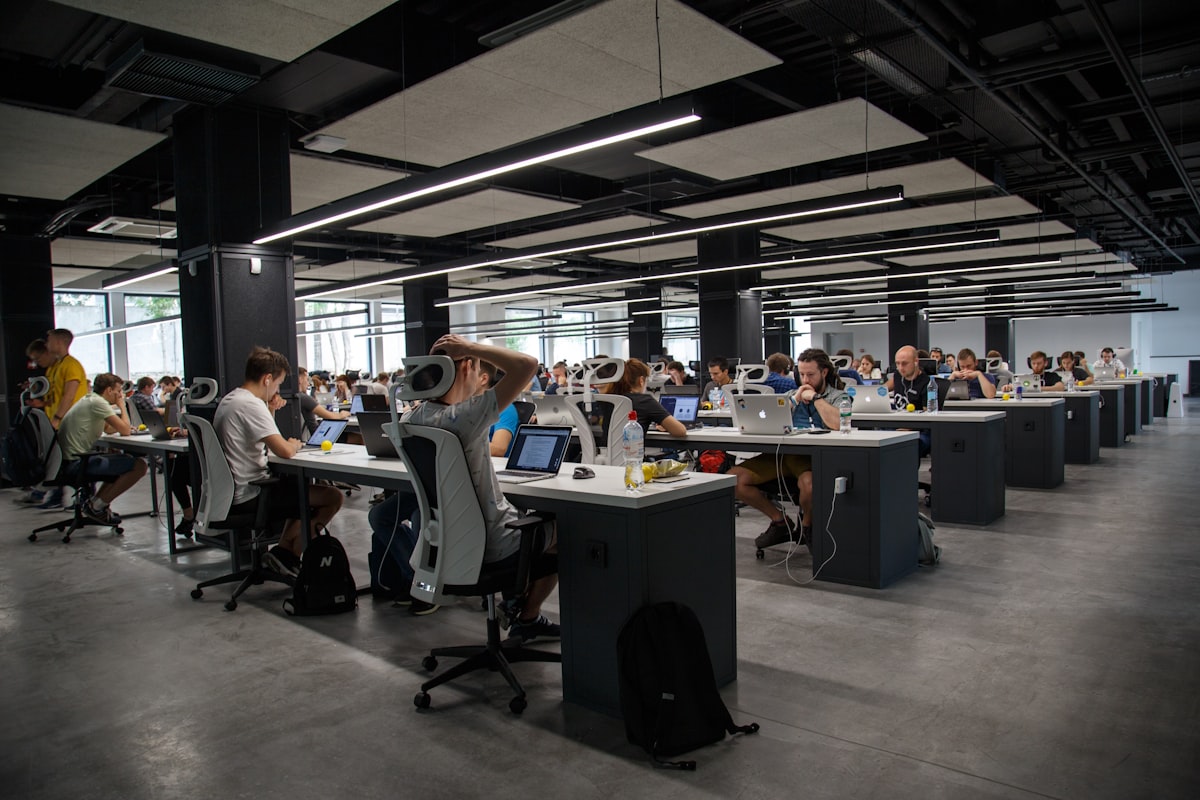
For software engineers, DevOps specialists, QA testers, and IT consultants worldwide, the narrative is unmistakable: the tech industry has permanently crossed an inflection point. The era of unchecked hyper-hiring is dead. In its place stands a leaner, AI-augmented engineering landscape where legacy technical roles are automated, middle-tier management is flattened, and engineers who fail to adapt risk becoming obsolete.
60,000+
Impacted employees across Azure, Hardware, Gaming & Sales.
AI CapEx Pivot
Billions redirected to NVIDIA Blackwell GPUs, OpenAI clusters & data centers.
Flat Hierarchy
Eliminating middle management to accelerate decision velocity.
Throughput > Headcount
High-output AI-augmented engineers outperforming legacy teams 10-to-1.
domain 1. Inside the Numbers: Which Divisions and Roles Were Cut?
When the news broke that Microsoft fires 60,000 employees, initial media speculation painted it as a simple reaction to macroeconomic headwinds. However, internal disclosures and organizational filings reveal a far more calculated, surgical redistribution of resources. Unlike indiscriminate post-pandemic cuts, this round directly targeted non-core product lines and organizational redundancies:
| Department / Division | Key Roles Impacted | Strategic Rationale | Corporate Direction |
|---|---|---|---|
| Azure Cloud & Infrastructure | Legacy middleware engineers, tier-1 cloud support, manual QA | Phasing out legacy manual operations in favor of autonomous AIOps and automated self-healing clusters. | Pivot to AI Supercomputing |
| Gaming & Xbox Studios | Publishing staff, QA specialists, duplicate administrative leads | Eliminating redundancies following the multi-billion Activision Blizzard King integration. | Consolidation & Studio Streamlining |
| Hardware & Mixed Reality | HoloLens hardware engineers, experimental sensor researchers | De-prioritizing standalone AR headsets to redirect research capital into multimodal Copilot AI models. | Deprecation of Hardware Bets |
| Enterprise Sales & Marketing | Regional account managers, solution architects, product evangelists | Automation of sales pipelines through automated AI Copilots and product-led self-service SaaS. | AI-Assisted Customer Funnels |
| Middle & Program Management | Scrum masters, agile coaches, administrative program directors | Flattening the hierarchy from 8 layers to 4 to speed up product delivery cycles. | Elimination of Bureaucratic Overhead |
As demonstrated by this breakdown, the employees being let go are not low performers; rather, they are casualties of a seismic corporate reallocation. Microsoft is executing what enterprise analysts call an "Asymmetrical Restructuring": shedding tens of thousands of headcount in mature or speculative divisions while aggressively hiring elite ML compilers, GPU kernel developers, and distributed systems architects.
analytics 2. Why Did Microsoft Fire 60,000 Employees? The 4 Core Catalysts
To understand how to protect your career, you must first understand the financial realities driving these corporate decisions. Why would a company generating over $20 billion in net income per quarter lay off so many workers? The answer lies in four interlocking economic forces:
The Enormous Capital Expenditure (CapEx) of the AI Arms Race
Building and running frontier AI models requires unfathomable capital. Microsoft is spending upwards of $50+ billion annually on capital expenditures—securing gigawatts of nuclear and renewable energy, constructing state-of-the-art liquid-cooled data centers, and purchasing hundreds of thousands of NVIDIA H100 and Blackwell B200 GPUs.
Every dollar allocated to human salaries in non-core projects is a dollar not being invested into AI infrastructure. In the eyes of boardrooms and Wall Street, lagging behind Google, Amazon, or Meta in foundation model capability represents an existential risk, whereas shedding 60,000 operational roles is considered routine corporate hygiene.
The Efficiency Multiplier of GitHub Copilot & Autonomous Agents
Microsoft is not just selling AI tools to the world; it is dogfooding them at enterprise scale. Within Microsoft's own engineering orgs, GitHub Copilot and internal autonomous agent frameworks now write, review, and test a substantial percentage of production code.
Tasks that formerly required a dedicated team of junior frontend coders, unit test writers, and tier-1 bug triagers are now handled in seconds by agentic workflows. When productivity per developer increases by 35% to 50%, an enterprise simply does not need as many hands on keyboards to maintain the same software roadmap.
Wall Street's "Rule of 40" and Revenue-Per-Employee Metrics
Institutional investors no longer reward big tech companies for gross employee headcount. In the current interest rate environment, public markets prioritize Revenue Per Employee (RPE) and operating margins.
By trimming 60,000 positions, Microsoft instantly boosts its operating leverage, driving up free cash flow and satisfying institutional shareholders who demand double-digit EPS growth even during massive infrastructure expenditures.
Correction of the "Pandemic Overhiring" Residue
Between 2020 and 2022, Microsoft, along with Meta, Google, and Amazon, added tens of thousands of staff in anticipation of permanent digital acceleration. While subsequent rounds of layoffs corrected much of that bloat, lingering organizational debt remained. This latest cut cleanses overlapping functional teams and closes underperforming initiatives that failed to reach critical mass.
hub 3. The Ripple Effect: How This Alters the Global IT & Software Industry
Whenever Microsoft makes a decisive staffing pivot, the rest of the technology ecosystem follows. From Tier-1 IT services giants in India (TCS, Infosys, Wipro, HCL) to Silicon Valley startups and European scale-ups, Microsoft's 60,000 employee reduction serves as an industry blueprint:
close What Is Dying in IT
- Routine CRUD Coding: Writing basic REST APIs and repetitive UI scaffolding is now commoditized by LLMs.
- Manual QA & Scripted Testing: Autonomous synthetic test suites generate, execute, and fix regression errors automatically.
- Administrative Agile / Scrum Masters: Engineering teams are shifting to autonomous async execution without process-heavy ceremonies.
- Generic "Full-Stack" Generalists: Knowing just React and basic Express without cloud, systems, or AI depth is no longer enough to command top salaries.
check What Is Exploding in IT
- AI Systems & RAG Architecture: Integrating foundation models, semantic caches, vector indexes, and fine-tuned domain models into enterprise applications.
- Cloud FinOps & Infrastructure Optimization: Enterprises are desperate for architects who can cut soaring AWS/Azure cloud compute bills by 40%.
- Distributed Systems & Low-Latency Concurrency: Real-time streaming, WebRTC, gRPC, and GPU orchestration pipelines.
- DevSecOps & Automated Pipeline Hardening: Securing supply chains against zero-days and algorithmic vulnerabilities.
verified 4. The 5-Pillar Adaptation Blueprint for IT Employees
If you are an IT professional—whether a fresher, mid-level software engineer, team lead, or architect—panicking about tech layoffs will not safeguard your livelihood. Proactive evolution will. Here is the exact, battle-tested 5-pillar adaptation blueprint implemented by forward-thinking engineers to achieve career resilience and recession-proof their trajectory:
psychology Pillar 1: Pivot to the "AI-Augmented" Engineering Stack
Do not stop at using ChatGPT to summarize emails. You must learn how to architect, evaluate, and productionize Generative AI solutions inside production software:
- Master Retrieval-Augmented Generation (RAG): Understand dense embedding models, chunking strategies, hybrid search (BM25 + vector cosine similarity), and vector databases like Milvus, Qdrant, or Pinecone.
- Build Multi-Agent Orchestration Workflows: Learn frameworks like LangGraph, AutoGen, and CrewAI. The future of software is autonomous agents calling APIs, verifying schemas, and self-correcting logic.
- Understand LLM Latency & Cost Tradeoffs: Knowing when to deploy a lightweight quantized local model (Ollama, vLLM, DeepSeek) versus calling expensive proprietary APIs (GPT-4o, Claude 3.5 Sonnet) makes you an invaluable engineering asset.
cloud_sync Pillar 2: Cultivate Deep Cloud FinOps & Infrastructure Skills
As big tech companies trim budgets, cost reduction is the #1 priority for CIOs and CTOs. An engineer who knows how to write code that reduces AWS, Azure, or GCP infrastructure costs by $10,000/month will never be laid off.
- Serverless & Container Orchestration: Master Kubernetes (K8s), Docker multi-stage builds, and event-driven architectures that scale down to zero when idle.
- Database Optimization & Caching: Transition from naive ORM queries to indexed SQL, Redis distributed caching, and read-replica strategies that alleviate database compute pressure.
- Cloud Architecture Auditing: Learn how to spot idle EBS volumes, unattached elastic IPs, misconfigured NAT gateways, and uncompressed egress traffic.
lightbulb Pillar 3: Evolve from "Ticket Taker" to "Business Problem Solver"
If your daily routine consists only of waiting for a Jira ticket, writing 20 lines of boilerplate JavaScript, and clocking out, you are at maximum risk of being automated or outsourced. To become indispensable:
- Understand the Unit Economics: Learn how your software actually makes or saves money for the business. What is the customer acquisition cost (CAC)? Where do users drop off in the conversion funnel?
- Proactively Propose Architectural Improvements: Don't wait for your manager to tell you the site is slow. Benchmark latency with Web Vitals, identify bottlenecks, and present a concise proposal to fix them.
- Cross-Skill Into Product Thinking: Bridge the communication gap between business executives, UI/UX designers, and backend engineering teams.
fingerprint Pillar 4: Build an Antifragile Public Proof-of-Work Portfolio
Resumes are losing their authority in the modern hiring landscape. Technical recruiters and hiring managers increasingly ignore bullet points and demand verifiable, public proof-of-work:
- Ship Public Developer Products: Build functional utilities, micro-SaaS applications, or open-source libraries. For example, our team at JoelX Orbit engineered Sindhai IDE (the first Tamil programming language IDE published on the Microsoft Store) and StreamLine WebRTC. Building tangible tools demonstrates rare initiative and comprehensive engineering capability.
- Publish In-Depth Technical Writing: Document real architecture decisions, post-mortems of system outages you resolved, or performance optimization benchmarks on your portfolio blog or LinkedIn.
- Maintain an Active, Verified GitHub: Clean commit histories, well-documented README files, automated CI/CD GitHub Actions workflows, and automated unit tests.
savings Pillar 5: Fortify Your Financial Runway & Psychological Health
Career resilience is impossible when you are living paycheck to paycheck in constant anxiety:
- Build a 6 to 12 Month Emergency Liquid Buffer: Having a dedicated emergency fund gives you the leverage to walk away from toxic environments, negotiate from strength, and take time to retrain rather than accepting the first low-ball offer during layoffs.
- Diversify Your Professional Income: Explore freelance architectural consulting, technical advisory roles, or building digital assets that generate ancillary revenue.
- Cultivate a Strong Peer Network: Tech hiring during down markets happens primarily through warm referrals and professional reputation, not cold LinkedIn job applications.
checklist 5. Action Plan: 30-Day Emergency Roadmap for IT Professionals
Here is a practical week-by-week protocol to upgrade your market position over the next 30 days:
Skills & Vulnerability Inventory
Audit your current daily responsibilities. Identify which 50% of your tasks can already be performed by AI agents. Update your portfolio, optimize your LinkedIn headline with high-intent keywords, and clean up your public GitHub repositories.
Build a Working RAG or Agent Workflow
Stop watching YouTube tutorials and build a working project. Integrate Python or Node.js with LangChain, LangGraph, and a vector database. Deploy it to a cloud provider with a publicly accessible live demo link.
FinOps & Infrastructure Hardening
Configure automated CI/CD deployment pipelines, containerize your applications with Docker, implement automated health-checks and rate-limiting, and benchmark performance metrics under simulated stress loads.
Publish Insights & Expand Reach
Write an architectural breakdown of what you built. Connect with 20 engineering managers, open-source maintainers, and startup founders in your domain. Offer actionable value before asking for referrals.
help 6. Frequently Asked Questions (FAQ): Microsoft Layoffs & IT Survival
Why is Microsoft firing 60,000 employees despite recording high quarterly profits?
Microsoft's layoffs are not caused by financial distress, but by strategic capital reallocation. Developing and maintaining cutting-edge generative AI models, custom silicon, and hyperscale data centers requires tens of billions of dollars in capital expenditure (CapEx). To fund these investments while preserving operating margins for Wall Street investors, Microsoft is trimming headcount in non-core hardware, legacy middleware, and middle management.
Which IT roles are at the highest risk of being laid off?
Roles that involve routine, repetitive execution without direct business ownership face the greatest risk: manual QA testers, tier-1 customer and IT support representatives, administrative Scrum masters, junior boilerplate frontend coders, and middle management whose primary duty is status reporting.
Will AI completely replace software engineers in the IT industry?
No, AI will not replace software engineers, but engineers who use AI to build complex, reliable systems will rapidly replace engineers who do not. Software engineering is evolving from syntax writing to high-level system architecture, security auditing, edge-case handling, and business integration.
What skills should developers prioritize to stay employable in 2026 and beyond?
Top in-demand technical proficiencies include: Agentic AI workflows (LangGraph, AutoGen), RAG architecture with vector databases, Cloud FinOps (infrastructure cost reduction), distributed systems concurrency (Go, Rust, Node.js), Kubernetes containerization, and enterprise cybersecurity/DevSecOps.
How can IT employees protect themselves from sudden company layoffs?
Build a 6 to 12 month emergency cash fund, consistently maintain a public proof-of-work portfolio (GitHub projects, technical articles), diversify your professional network outside your current employer, and avoid becoming a specialist in proprietary, company-specific internal legacy tools.
The Future Belongs to the Adaptive Architect.
The headline that Microsoft fires 60,000 employees is not a harbinger of doom for the tech industry; it is a catalyst for transformation. The demand for digital innovation has never been higher, but the rules of engagement have changed. By upgrading your technical toolkit, understanding business value, and building public proof-of-work, you will not only survive this wave of tech restructuring—you will lead it.